
How It Works
Your Path to the Minnesota Civic Seal
The freedom to speak up, take action, and make a difference in your community — that is what democracy looks like in practice. The Minnesota Civic Seal recognizes students who live that out.
This is not just another award. It is recognition that you took your civic education beyond the classroom and into the real world. Here is how you earn it.
Track Your Progress
Create an account to start tracking your activities and progress toward the Minnesota Civic Seal. Or log in to update your activities, check your points, and submit your work.
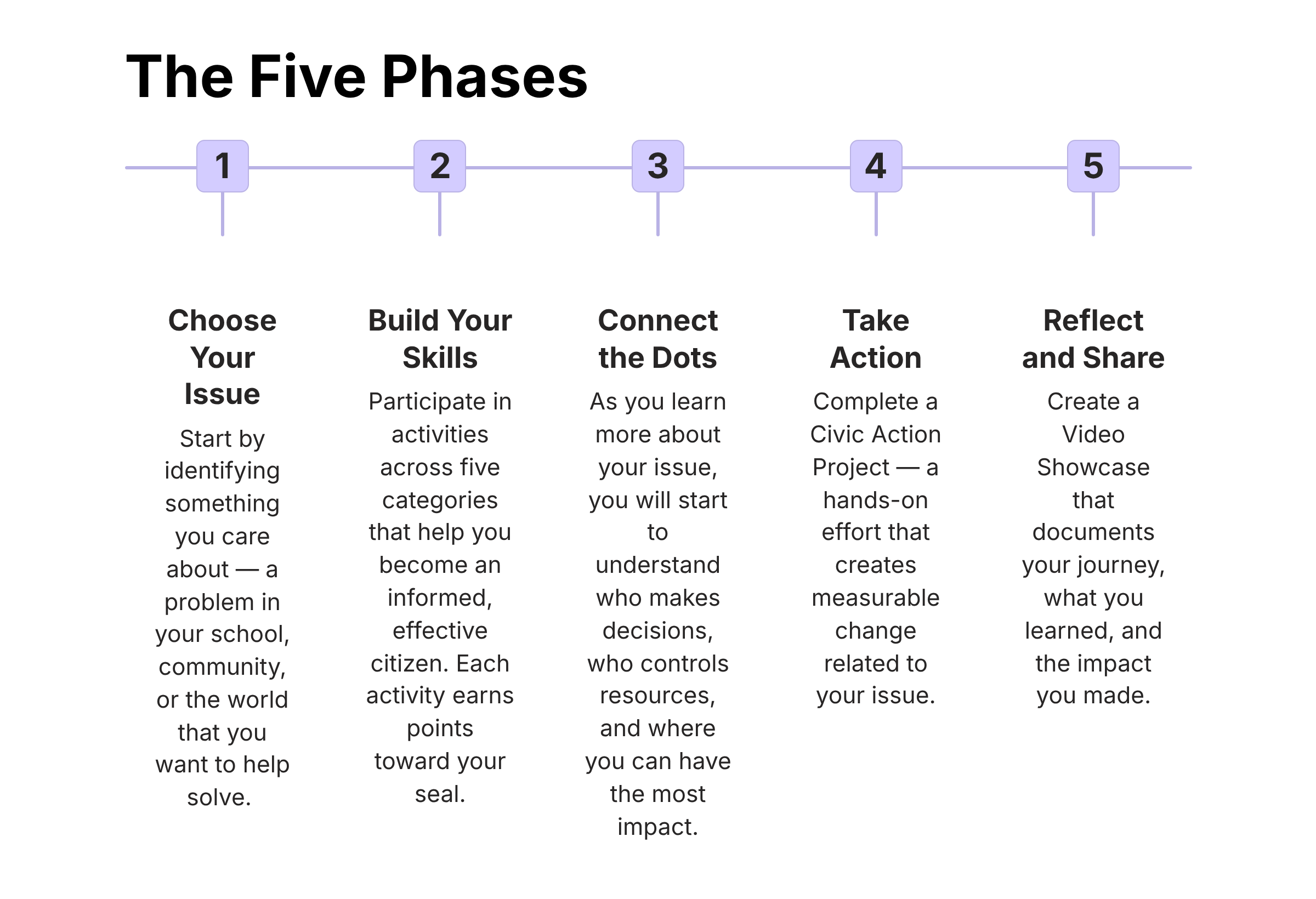

Requirements to Earn the Seal
To earn a Minnesota Civic Seal, you need:
At least one activity in each of the five categories
Democratic Engagement
Civic Knowledge
Media Literacy
Community Service
Bridge Building
120 total points from all activities Including your Civic Action Project
A completed Video Showcase 2-5 minutes documenting your civic journey

What You Will Gain
Skills for Life Leadership, teamwork, problem-solving, and communication skills that will help you in college, career, and civic life.
Recognition A seal on your diploma and transcript that shows colleges and employers you do not just care about your community — you take action to make it better.
Real Impact The satisfaction of knowing you made a genuine difference on an issue that matters to you.
Choose Your Issue
Finding Your Civic Focus
The first step in earning the Minnesota Civic Seal is choosing an issue. This is personal — nobody is going to tell you what to care about. But we can help you find the right focus.
-
Think about the things you care about or the problems you see around you. Maybe it is mental health, the environment, access to affordable housing, or something happening at your school.
Ask yourself:
What change would make life better for people I know?
What do I wish more people understood or cared about?
What frustrates me about my school, community, or the world?
What experiences have shaped how I see certain issues?
-
Pick an issue that balances two things:
Passion: Something you genuinely care about All the feasibility in the world will not sustain you if you do not care.
Feasibility: Something you can realistically do something about All the passion in the world will not help if there is no path forward.
You need both.
-
Once you have identified a potential issue, think through these questions:
Who is most affected by this issue and what is the root cause in my community?
Who in my community is already working on this issue and how are they trying to solve the problem?
What strategies are currently being used to address this issue and what gaps exist?
Is there anyone who would oppose my proposed solution? Why would they feel that way?
What unique skills, perspectives, or energy do I bring to this effort?
What evidence, stories, or visuals would help me explain this issue to others?
-
Use this template to clarify your focus:
"In [your community], [the problem] affects [who] by [how]. This matters because [why]."
Example:
"In our school district, inconsistent mental health services affect students across all schools by creating long wait times and gaps in care. This matters because student wellbeing directly impacts learning, safety, and long-term success."
-
Focus on root causes, not just symptoms. If you address only what is visible on the surface, your impact will be temporary. Understanding why a problem exists helps you create lasting change.
Connect to your own experience. Choosing an issue that relates to your life makes your project more personal, powerful, and rewarding.
Talk to people. Friends, family, teachers, and community leaders can offer perspectives you have not considered.
Civic Action Projects
From Learning to Leading
A Civic Action Project is the heart of the Minnesota Civic Seal experience. It is where you take everything you have learned about your issue and put it into action to create measurable change.

What Makes a Good Project?
Your Civic Action Project should be:
Measurable — You can track your progress and see results
Achievable — It is realistic given your timeline and resources
Relevant — It addresses root causes of your issue, not just symptoms
Projects can be undertaken individually, with classmates, or in partnership with community members and organizations.
Project Examples

-
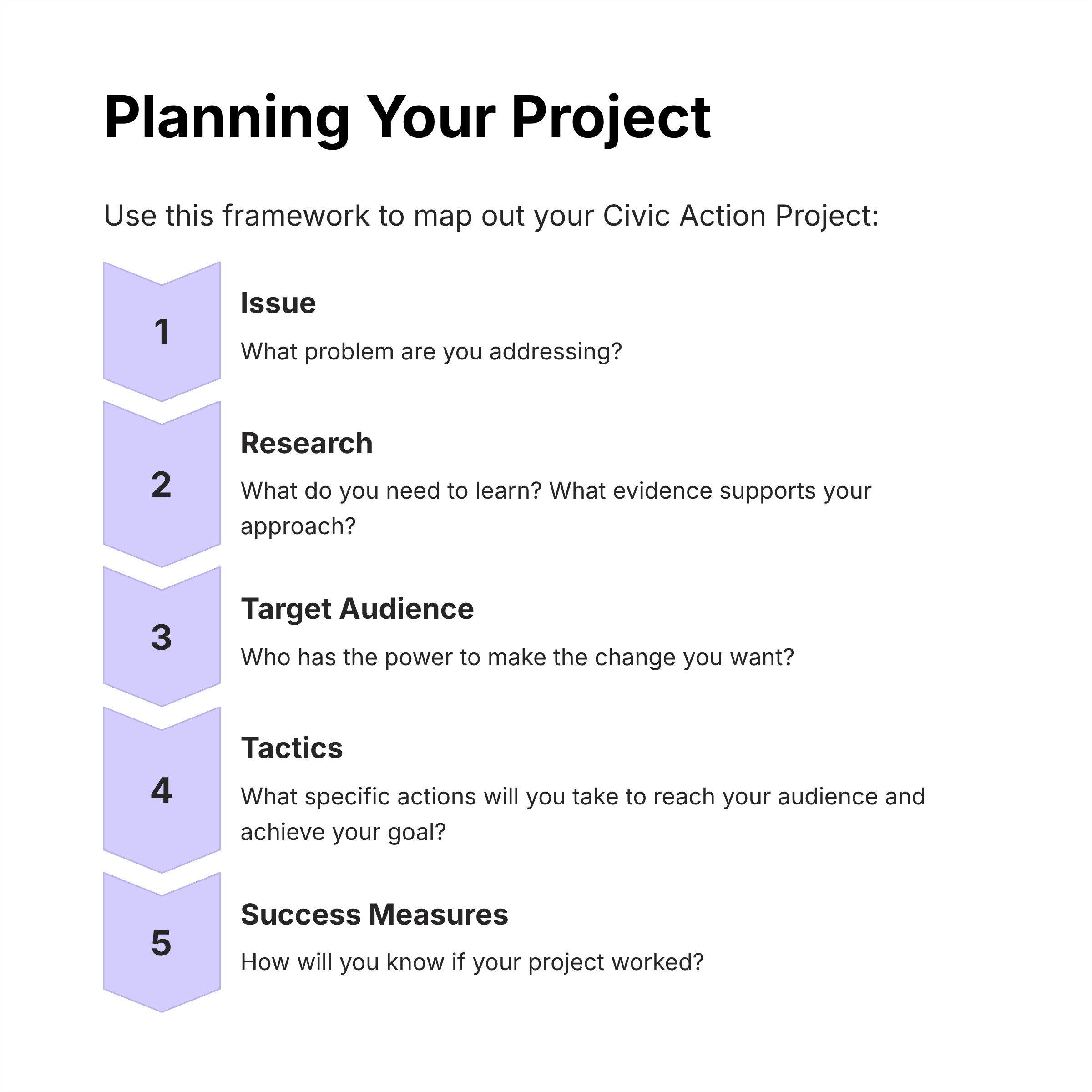
Reducing Student-to-Counselor Ratios
Issue: Inadequate access to school mental health support
Research: Current district ratios vs. recommended standards; student testimony on access barriers
Target: School board
Tactics: Attend board meetings, organize student testimony, present budget recommendations
Peer Mental Health Support Program
Issue: Need for student-centered mental health resources
Research: Evidence-based peer support models; sustainable program structures
Target: Building principals or district wellness coordinators
Tactics: Develop training curriculum, propose pilot program, advocate for district-wide adoption
-
Pollinator-Friendly Public Spaces
Issue: Pollinator decline due to conventional landscaping practices
Research: Minnesota pollinator data; cost comparison of native vs. traditional plantings; examples from other cities
Target: City parks department or council members overseeing parks
Tactics: Present research findings, propose policy changes to current mowing and planting practices
-
Student Advisory Council on Curriculum
Issue: Lack of student voice in curriculum decisions
Research: Models for student advisory structures; benefits of student input on learning
Target: School board (policy creation) or building administrators (pilot program)
Tactics: Propose formal structure, advocate for institutionalized youth voice
School Nutrition Advocacy
Issue: Concerns about lunch quality and access
Research: USDA requirements vs. current offerings; student survey data; meal analysis
Target: District food service directors or superintendent
Tactics: Conduct surveys, analyze data, propose specific menu or policy changes
-
Community Media Literacy Initiative
Issue: Misinformation and lack of news evaluation skills
Research: Effective media literacy curricula; institutional adoption pathways
Target: Library systems, school districts, or community education programs
Tactics: Develop and host workshops, advocate for institutional adoption
-
Youth Seat on Local Commission
Issue: Absence of youth representation in local government
Research: Existing commission structures; mayoral appointment authority; models from other cities
Target: City council or mayor
Tactics: Advocate to council members, mayor, or commission chairs
-
Pedestrian Safety Near Schools
Issue: Safety hazards for students traveling to school
Research: Observation data; student surveys; incident reports; traffic studies; cost estimates for improvements
Target: City transportation department or city council if funding approval needed
Tactics: Document concerns, present comparable solutions, propose specific infrastructure changes
-
Structured Community Dialogue
Issue: Community division on local concerns
Research: Facilitation best practices; community priorities; partnership opportunities
Target: Determined by issues emerging from dialogue; may involve local government
Tactics: Plan and facilitate cross-community conversations, build momentum for policy action
Types of Outcomes
Your project might aim for one or more of these outcomes:
Real-World Change You see a positive difference in your school or community — like a new recycling program, a student mental health initiative, or improved access to resources.
Raised Awareness You educate others about an important issue through a campaign, presentation, or social media project that gets people talking and thinking differently.
Influenced Decision-Makers You meet with school leaders, community members, or elected officials — and your ideas help shape a policy, rule, or plan.
Increased Engagement You inspire classmates, teachers, or community members to take action, volunteer, or join your effort.

Video Showcase
Sharing Your Civic Journey
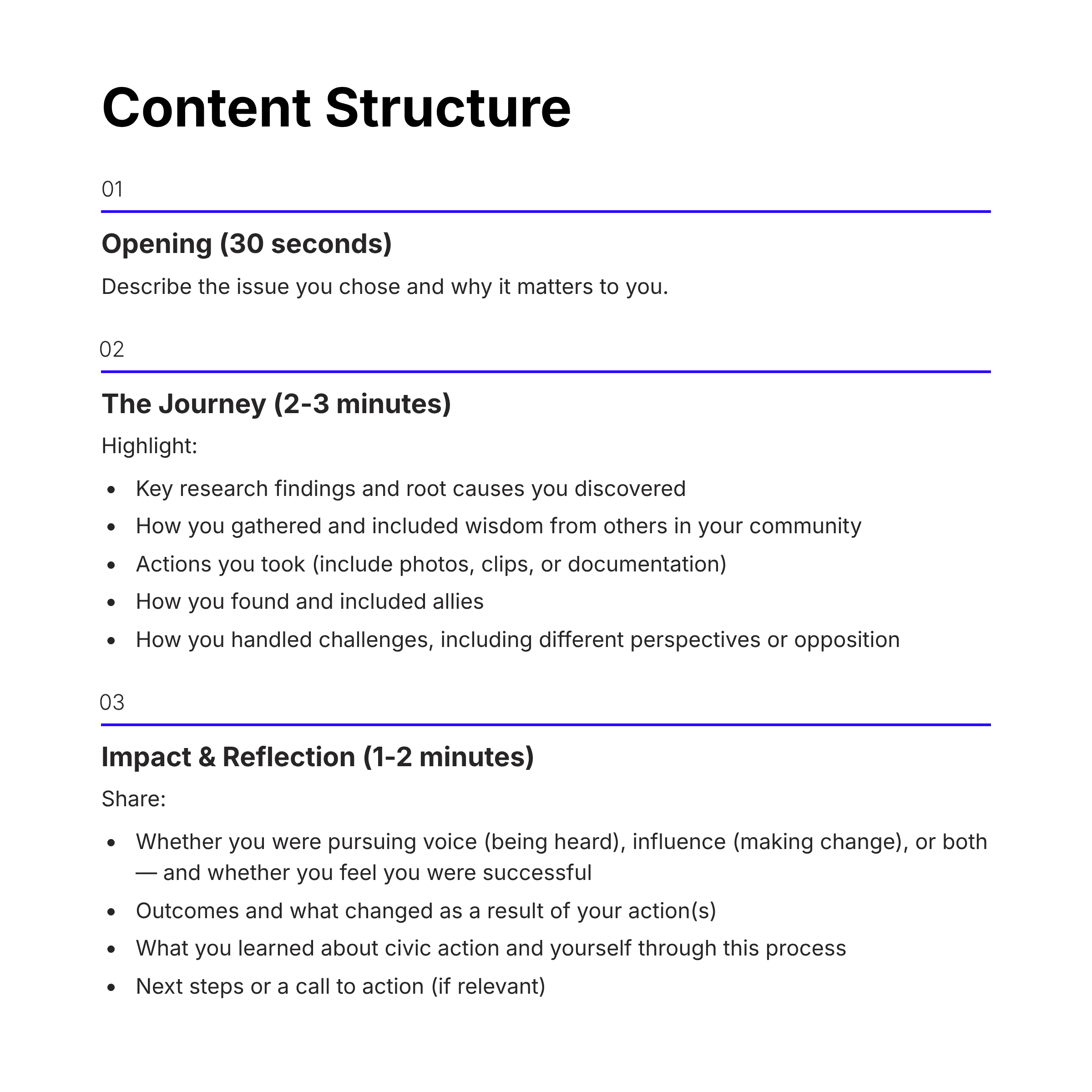
The Video Showcase is the final component of earning your Minnesota Civic Seal. It is your chance to reflect on what you have learned, document your impact, and share your story.
What Makes a Good Project?
Tips for a Strong Video
Be authentic. This is your story — tell it in your voice.
Show, don't just tell. Include photos, clips, screenshots, or other evidence of your work.
Reflect honestly. The best showcases discuss both successes and challenges.
Connect your learning. How did what you learned in the five categories help you in your project?
Types of Outcomes
Video Requirements
Length: 2-5 minutes
Format: Any video format (.mp4, .mov, etc.)
Submission
Once you complete your Video Showcase, upload it and share the link through the student portal.